

Several police services in Canada utilize facial recognition technology to assist in solving crimes, while others express reservations due to concerns about human rights and privacy implications hindering their adoption of such powerful digital tools.
The varying use of the technology and the lack of stringent regulations governing its application have prompted legal and AI experts to urge the federal government to establish national standards.
According to Kristen Thomasen, a law professor at the University of British Columbia, given the uncertainties surrounding the risks associated with this technology, there should be either a moratorium or specific restrictions on its usage until better control measures are in place.
The disparate regulations on emerging biometric technologies have resulted in unequal protection of privacy rights for different individuals, pointing to the need for federal intervention, she emphasized.
-
How a New Jersey man was wrongly arrested through facial recognition tech now in use in Ontario
-
York, Peel police now using facial recognition technology
Facial recognition systems, a type of biometric technology leveraging AI to match faces from images or videos, have stirred controversy as a policing tool.
In 2021, an investigation by the Office of the Privacy Commissioner of Canada revealed that the RCMP violated privacy laws by employing facial recognition technology without public knowledge. Similarly, Toronto police acknowledged unauthorized use of facial recognition software by some officers, sourced from Clearview AI, a U.S. company utilizing unconsented images from the internet in its database.
Recently, York and Peel Police in Ontario announced the adoption of facial recognition technology from Idemia, a multinational French firm. Const. Kevin Nebrija from York Police stated that these tools expedite investigations and suspect identification, while ensuring privacy remains unaffected due to ubiquitous security cameras.
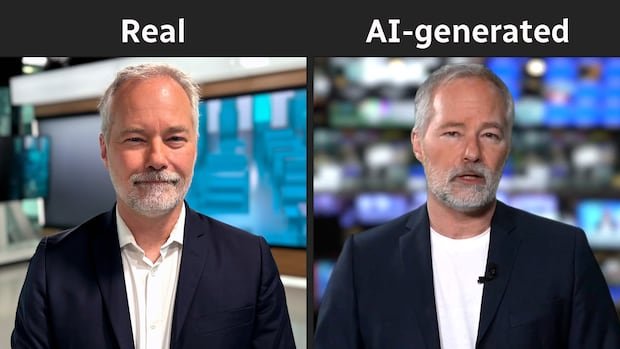
A 24-hour news channel startup based in southern California comes with a twist: all of the reporters and production are AI-generated. CBC’s Jean-François Bélanger explores what Channel 1 is promising and why some are